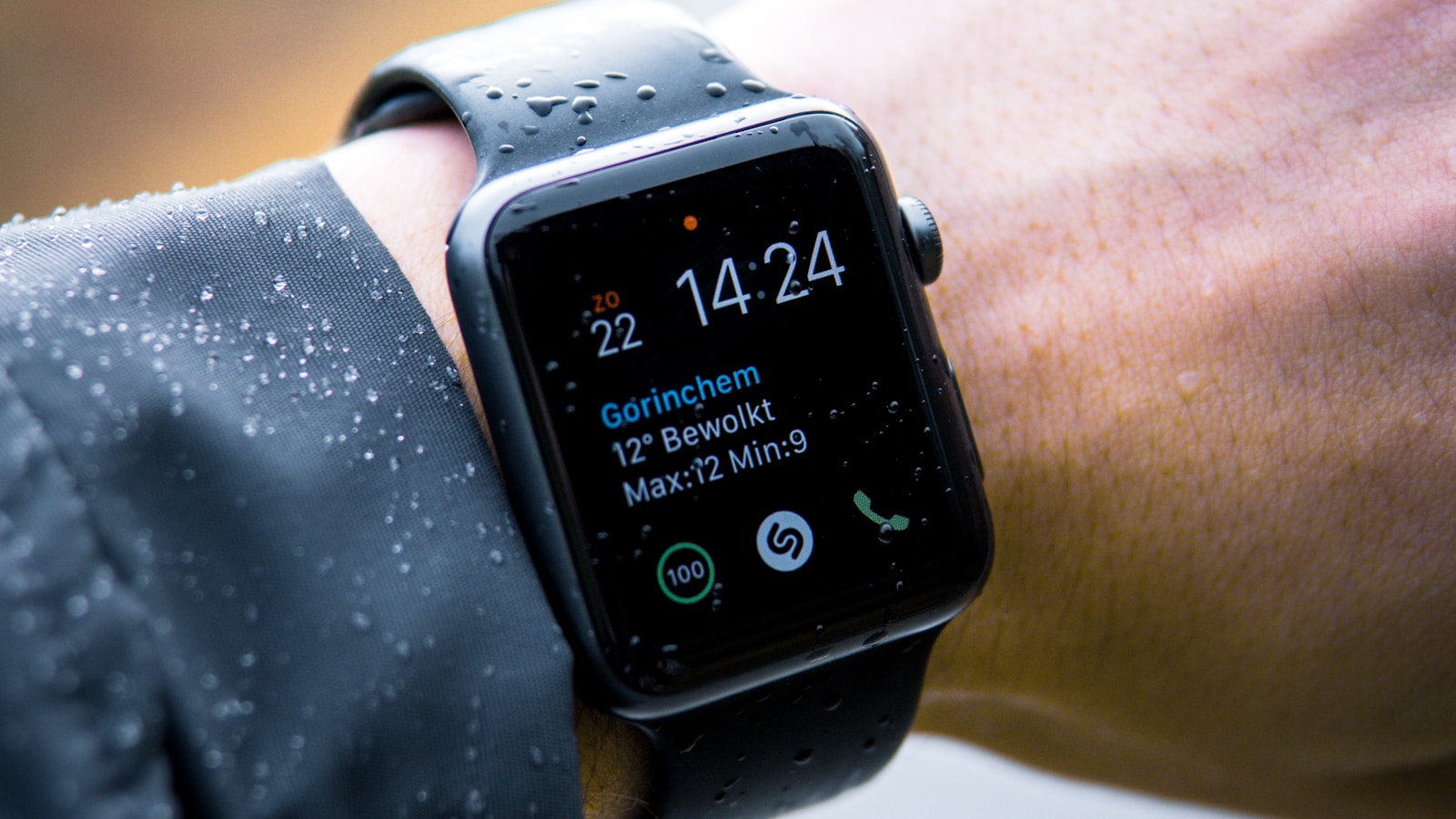
HRV Meaning: What Heart Rate Variability Actually Tells You
You've seen the three letters everywhere — in your Apple Watch Health app, in Whoop and Garmin summaries, in every fitness podcast's cold open. HRV. Heart rate variability. Everyone treats it like a vital sign, but if you're new to this, the whole thing can feel like a secret handshake you weren't taught.
Let's fix that right now, in plain language.
HRV is the variation in time between your heartbeats. Not your heart rate — the spacing between beats. If your heart beats 60 times a minute, that doesn't mean one beat every 1,000 milliseconds. In a healthy, relaxed body, the gaps constantly change: 980 ms, then 1,040 ms, then 990 ms. That constant, subtle variation is HRV. And the strange part that trips everyone up: higher HRV is generally better. More variation means your body is relaxed, recovered, and flexible. Low HRV — a mechanical, metronome-like heartbeat — means your body is stressed, tired, or fighting something.
TL;DR: HRV measures the tiny variations in time between heartbeats. High HRV = your nervous system is relaxed and you're recovered. Low HRV = you're stressed, fatigued, or unwell. It's deeply personal — compare your number to your own baseline, never to a friend's. Your Apple Watch measures it while you sleep; the trend over weeks matters far more than any single reading.
YouTube: Related video
HRV is not heart rate (the #1 confusion)
It's worth being really clear here, because this one misunderstanding causes endless confusion.
Heart rate tells you how many times your heart beats per minute. It's your body's overall tempo.
HRV tells you how adaptable that tempo is — the milliseconds of variation between individual beats.
Think of it like a car. Heart rate is the RPM gauge: how fast the engine is spinning. HRV is the suspension: how well the car absorbs bumps and adjusts to the road. A race car doesn't need a stiff suspension all the time — it needs to respond. A healthy heart is the same: it speeds up when you stand up or sprint, slows when you rest, and constantly fine-tunes its rhythm. That fine-tuning is HRV.
One more way to picture it: your heart is always listening to two opposing signals from your nervous system.
- The sympathetic branch is your accelerator — "go, fight, stress, effort."
- The parasympathetic branch is your brake — "rest, digest, recover, calm."
When you're relaxed, the brake signal gently fights the accelerator, and your heart's rhythm dances between them — high variation. When you're stressed, sick, or overtrained, the accelerator dominates, the brake pulls back, and your heartbeat becomes monotonous — low variation. HRV is essentially a live readout of that tug-of-war.
What your numbers actually mean
Your wearable (Apple Watch included) reports HRV in milliseconds. Here's how to interpret the direction of change:
| HRV | What it usually means | Typical situations |
|---|---|---|
| High (vs. your baseline) | Parasympathetic dominance — relaxed, recovered | After good sleep, rest days, vacation, light training weeks |
| Normal (near baseline) | Balanced, steady state | Normal life, consistent training |
| Low (vs. your baseline) | Sympathetic dominance — stressed or recovering | After hard training, poor sleep, alcohol, illness, work stress |
Two crucial caveats that most explanations skip:
1. There is no universal "good" HRV number. A 30 ms reading might be excellent for one person and alarming for another. Your HRV is shaped by age, genetics, fitness, and even the sensor on your wrist. The only meaningful comparison is you versus your own baseline — usually a rolling 7-day or 30-day average.
2. A low single reading is not a diagnosis. HRV wobbles day to day. A dip on Monday after a hard Sunday ride isn't a health crisis — it's your body saying "I'm working on it." What matters is the trend: a string of low readings, or a baseline that's been sliding for weeks, is worth paying attention to.
What does HRV tell you in real life?
The practical value of HRV is that it gives you an honest, unfakeable signal about your body's state — often before you feel it. Common real-world patterns:
- You drank alcohol last night → HRV drops noticeably. Even one or two drinks can suppress HRV for 24–48 hours. This is the classic "your watch knows you had wine" moment.
- You slept badly → HRV tends to dip, though some people's HRV stays high and their resting heart rate rises instead. Bodies differ.
- You're coming down with something → HRV often drops a day or two before symptoms appear. Your immune system is working hard, and your nervous system reflects it.
- You trained too hard for too long → a sliding HRV trend is one of the earliest warning signs of overtraining, alongside a rising resting heart rate.
- You're well rested and consistent → HRV trends up, especially when you fix sleep habits, cut alcohol, and manage stress.
This is why serious athletes and longevity enthusiasts treat HRV like a dashboard light: it tells you when to push and when to back off.
How your Apple Watch measures HRV
Your Apple Watch measures HRV using the same green LED optical sensor that tracks your heart rate, capturing the tiny time differences between beats. A few things worth knowing:
- It records HRV values throughout the day and night, and you can see them in the Health app (Health → Browse → Heart → Heart Rate Variability).
- The numbers Apple stores are SDNN values — a specific mathematical measure of variability. Many other wearables (Whoop, Garmin) report RMSSD, a slightly different metric. That's fine — just don't compare an Apple SDNN number to a Whoop RMSSD number as if they're the same thing.
- Apple measures most reliably during sleep (and during mindfulness breathing sessions), when you're still and your heart rate is low. For the most consistent trend, look at the overnight readings rather than daytime noise.
- Consistency beats frequency. Checking HRV at the same time, under the same conditions (ideally first thing in the morning or from overnight sleep) gives you a much cleaner signal than spot-checking at random times during a busy day.
If you want a clean morning reading, sit still for a minute before you get up, breathe normally, and let the watch take its measurement — then check the number.
What actually moves your HRV (the levers you control)
The good news: HRV responds to your habits. These are the levers that move the needle, roughly in order of impact:
| Lever | Direction | Why it works |
|---|---|---|
| Sleep | ↑ biggest win | Deep sleep is when parasympathetic tone peaks; consistent sleep raises your baseline |
| Alcohol | ↓ strong | Suppresses parasympathetic activity; even moderate amounts show up |
| Hard training load | ↓ short-term | Exercise stress is real stress; HRV dips until you recover |
| Consistent Zone 2 cardio | ↑ long-term | Builds aerobic fitness and resilience over weeks and months |
| Stress & overwork | ↓ | Chronic stress keeps the accelerator pressed |
| Slow breathing | ↑ acute | 6 breaths/minute (resonance breathing) boosts HRV in minutes |
| Illness | ↓ | Any infection taxes the system; HRV often drops before symptoms |
Don't try to optimize all of these at once. Pick the one that's most off in your life — usually sleep or alcohol — and give it two weeks. Your HRV trend will likely follow.
How to actually read your Apple Watch HRV chart
Open the Health app on your iPhone and go to Browse → Heart → Heart Rate Variability. You'll see a graph of daily values — usually a scatter of points, because Apple records multiple measurements throughout the day. Here's how to make sense of it without spiraling:
- Look at the overnight points first. Apple measures HRV continuously, but the most stable readings come during deep sleep, when you're still and your body is in its most parasympathetic state. Those overnight values are the ones worth tracking over time. Many people find it helps to mentally ignore the scattered daytime points, which bounce around with activity, meals, and stress.
- Switch to the "M" (monthly) or "6M" view. A single day tells you almost nothing. The monthly view smooths out the noise and shows you the actual trend — is your baseline drifting up, down, or holding steady?
- Use the 7-day average as your daily number. If you want a single value to track, take the average of the last 7 days of overnight readings. Compare today's 7-day average to last week's, not to yesterday's single point.
- Watch for the classic patterns. HRV trends down across a hard training block and rebounds on rest days. It drops the morning after alcohol. It slides before you get sick. And it climbs during consistent, well-rested training. Once you know your baseline, these patterns become readable stories about your week.
One more thing: Apple also records HRV during the Mindfulness breathing sessions on the watch. Those readings are a nice bonus, but they're taken under different conditions than sleep readings, so don't mix the two sets when judging your trend. Pick one context and stick with it.
What about HRV and longevity?
You'll sometimes see claims that HRV is a longevity marker, and there's real research behind that — with important nuance. In large population studies, people with higher HRV tend to have lower mortality risk, and HRV is a clinically established risk indicator in cardiology. But for you, as an individual, the number on your wrist isn't a fortune-teller. It's a state signal: it reflects how well your body is coping with current stress and recovery demands.
The longevity angle is more interesting as a habit story. The things that genuinely move HRV up over the long term — consistent sleep, regular Zone 2 aerobic training, low alcohol intake, managed stress — are the same things associated with slower biological aging. So instead of chasing a higher HRV number directly, chase the habits, and let HRV be the honest scoreboard that tells you whether they're working. When your 30-day average trends up, your habits are compounding. When it slides, something in your routine needs attention. That feedback loop, maintained over years, is where the real longevity value lives.
How to actually improve your HRV (in order of impact)
If your trend is low and you want to move it, here's the priority order that works for most people:
- Fix your sleep. This is the biggest lever by far. Consistent bed and wake times, 7–9 hours, dark cool room. Sleep is when your parasympathetic system does its best work.
- Cut alcohol — even temporarily. One evening of drinking can suppress HRV for 24–48 hours. A two-week alcohol-free experiment is the fastest way to see your baseline climb.
- Stop overtraining. If you're stacking hard sessions with no easy days, HRV will slide. Build in rest days and easy Zone 2 sessions — they're not wasted days, they're where adaptation happens.
- Manage stress deliberately. A daily 10-minute slow-breathing practice (around 6 breaths per minute) acutely raises HRV and, done consistently, supports your baseline.
- Be patient. HRV trends move on the scale of weeks and months, not days. Don't expect a single good night to rewrite your average.
Common HRV mistakes beginners make
- Comparing your number to someone else's. The single biggest source of unnecessary worry. Your 40 ms isn't "worse" than your friend's 70 ms. It's just yours.
- Panicking over one low reading. One data point is noise. Look at the 7-day average and the direction of the trend.
- Checking at random times of day. HRV fluctuates with activity, meals, and stress. Random checks create random (meaningless) numbers. Standardize the timing.
- Assuming low HRV = unfit. Low HRV can mean you're overtrained or stressed — but a one-off low reading after a hard week isn't a verdict on your fitness.
- Ignoring context. HRV doesn't exist in a vacuum. Read it alongside resting heart rate, sleep, and how you actually feel. A low HRV and high resting heart rate and poor sleep is a much stronger signal than any one metric alone.
The bottom line
HRV is the closest thing you have to a real-time report on your nervous system. It's not a magic number and it's not a competition — it's a personal, directional signal that tells you how well your body is absorbing the stress you throw at it. High and rising means you're recovered and resilient. Low and sliding means something is draining you, and it's usually one of the usual suspects: sleep, alcohol, training load, or stress.
Learn your baseline, watch the trend, and use it as a gentle guide — not a judge. That's the healthy way to use HRV, and it's exactly how the people who've worn these watches for years use it: as one honest voice in the conversation about how you're really doing.
Quick summary
- HRV = the variation in time between heartbeats; higher is generally better.
- It reflects the balance between your "go" and "rest" nervous system branches.
- Apple Watch reports HRV (SDNN) in ms — compare to your own baseline, not others.
- Low HRV is a normal response to hard training, poor sleep, alcohol, stress, or illness.
- Watch the 7-day trend, check at consistent times, and use HRV alongside sleep and resting heart rate.
- Biggest levers: sleep quality, alcohol, consistent Zone 2 training, stress management.
Century AI helps you understand your body with a daily health score, recovery score, and sleep insights — using the watch you already wear.